
Transmission & Energy Storage Equipment
Major Energy Storage Consolidation: C&D Technologies Acquires Trojan Battery
When two battery companies with almost 100-year histories combine, the result is one huge battery player, ready to meet the growing demand for energy storage solutions. That’s the idea at least behind Trojan Battery Company’s announcement last week that it is being acquired by C&D Technologies.
California-based Trojan was founded in 1925 by the Godber family, which owns a minority stake in the business today. The majority of the business is held by an affiliate of Charlesbank Capital Partners. After the acquisition is complete, in about 60 days, the entire company will be owned by C&D Technologies, which itself is a portfolio company of KPS Capital Partners.
Pennsylvania-based C&D was founded in 1906 and makes batteries for the utility, telecom, UPS, cable, broadband and renewable energy markets. It has four manufacturing facilities in the U.S., Mexico and China.
Trojan Battery makes lead-acid batteries for motive and stationary applications, including aerial work platform/MEWP, airport ground support equipment, floor cleaning machines, golf and utility vehicles, marine/RV, material handling, oil/gas and renewable energy industries and also has four manufacturing facilities in Calif. and Georgia plus two advanced R&D centers in Georgia and Ireland. The company has just released its first lithium-ion battery.
This acquisition will create one of the largest energy storage providers with over $1.0 billion of revenue, eight manufacturing facilities and a presence in every major region, according to the companies.
“Trojan Battery is an industry leader with a great heritage and an amazing team of employees,” said Neil Thomas, president and CEO of Trojan Battery. “The synergies between Trojan and C&D will create a global leader in energy storage solutions with two iconic brands, quality products and the ability to supply advanced battery technologies to customers around the world.”
Sector News
Taliva Energy completes supply and integration of 160 MWh of its 520 MWh Romanian storage portfolio
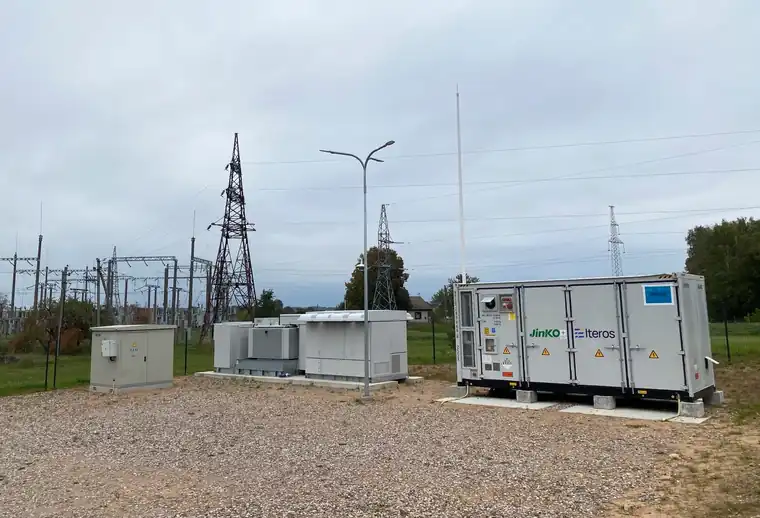
Turkish integrator Taliva Energy has completed supply and integration of 160 MWh of batteries for its 520 MWh, 32-project storage portfolio in Romania.
Türkiye-based system integrator Taliva Energy has completed the supply and integration of 160 MWh of battery systems for its grid-scale energy storage projects in Romania. The delivery, finalised at the end of September, covers part of a 520 MWh portfolio spanning 32 locations for which the company signed agreements in 2026; Taliva aims to complete supply for the remaining capacity by year-end.
32 projects across Romania
The company’s Romanian portfolio now exceeds 520 MWh across 32 signed projects. Sites include Zorleni, Bălțești, Baba Ana, Mihăești, Gorj and Satu Mare. Taliva acts as a full-scope supplier and system integrator, handling technology selection, battery procurement, logistics, engineering, site integration, commissioning, and operations and maintenance.
Integrated approach from hardware to software
CEO Mario Dalsarfati said that getting batteries to site and turning them into a working system is a critical milestone for any storage investment, and that the company is pursuing its goal of becoming a leading grid-scale project integrator. According to Dalsarfati, Taliva combines procurement with ensuring that battery systems operate in step with power conversion equipment, energy management software and grid requirements, using its own domestically developed software across integration, site and maintenance management.
At the start of each project, Taliva assesses site conditions, grid connection requirements and operating goals to define system capacity and architecture under its Taliva ESS offering. The engineering and manufacturing capabilities of iNOVAT, in which Taliva holds an equity stake, support the technical base for energy storage systems and medium-voltage solutions.
PowerKonnekt EMS at the control layer
Control and optimisation are handled by PowerKonnekt, an energy management system developed by iNOVAT that works with equipment from different manufacturers. The EMS optimises a portfolio of more than 1.5 GWh across nine European countries, including Finland, Italy and Romania. Taliva coordinates system integration and testing, carries out on-site performance verification and commissioning, and supports investors through operation with monitoring, technical support, maintenance and performance optimisation under Taliva O&M.
Next markets: Italy, Poland, Ukraine and Greece
With a 25-person energy team in Türkiye and Romania and more than six years of experience supplying renewable energy products in Europe, Taliva runs its Romanian activities with Turkish engineering and local service teams. Building on this experience, the company is pursuing localisation and market entry in Italy, Poland, Ukraine and Greece, with Eastern Europe and Türkiye as its main growth focus.
Image: Taliva Energy
Transmission & Energy Storage Equipment
LONGi publishes annual report for 2022 and 2023 Q1
Xi’an, China | Frankfurt, Germany: May 24, 2023 – LONGi Green Energy Technology, a global leading renewable energy company, released its annual report for 2022 and 2023 Q1. According to the financial report, the company achieved a revenue of 128.998 billion yuan in 2022, a year-on-year increase of 60.03%. This is the first time that LONGi’s yearly revenue stands above the 100 bn yuan level.
For the first quarter of 2023, LONGi’s revenue reached 28.319 billion yuan (USD 4.24 bn), up 52.35% from last year. In the report, LONGi announced that its 2023 revenue is expected to surpass 160 bln yuan.
LONGi’s 2022 net profit attributable to shareholders of the listed company was 14.812 billion yuan (USD 2.21 bn), a y-o-y increase of 63.02%. Its net profit attributable to shareholders of the listed company after deducting non-recurring gains and losses was 14.414 billion yuan (USD 2.15 bn), a y-o-y increase of 63.31%.
The report shows that in 2022 LONGi has produced a total of 85.06GW of monocrystalline silicon wafers, including 42.52GW for external sales and 42.54GW for internal use, steadily ranking 1st in global shipments of monocrystalline silicon wafers for 9 consecutive years. In 2022, LONGi produced 46.76GW of monocrystalline silicon modules, including 46.08GW for external sales and 0.68GW for internal use, steadily ranking 1st in global shipments of modules and market share for 3 consecutive years.
During the reporting period, LONGi’s net cash flow from operating activities was 24.37 billion yuan (USD 3.64 bn), an increase of 97.77% y-o-y. The company’s monetary funds was 54.372 billion yuan (USD 8.12 bn), accounting for 38.96% of total assets, with a y-o-y increase of 86.38%.
From 2020 to 2022, LONGi’s asset-liability ratio was 59.38%, 51.31% and 55.39% respectively. The company adheres to a prudent business philosophy and maintains a reasonable asset liability ratio. And the company’s weighted average net return on assets is 27.23%, 21.45% and 26.95% respectively.
Since its IPO in 2012 to September 2022, LONGi has invested over 18 billion yuan (USD 2.69 bn) in R&D. By the end of 2022, the company has obtained 2,132 patents. LONGi now has a team of 4,036 employees for R&D and technological innovation, accounting for 6.66% of its entire global staff.
During the reporting period, LONGi has set a new world record of p-type HJT silicon solar cell efficiency at 26.81%, certified by the German Institut für Solarenergieforschung (ISFH; Institute for Solar Energy Research) in Hameln. The maximum mass production efficiency of its module product Hi-MO 6 exceeds 23.2%. LONGi has made continuous breakthroughs in the industrialization of new high-efficiency solar cells, the R&D of original module technologies, and the transformation of industrial achievements.
By the end of 2022, LONGi’s production capacity for monocrystalline silicon wafers, cells, and modules have respectively reached 133GW, 50GW, and 85GW.
The report also shows that LONGi has accelerated digital transformation and smart manufacturing development. With the transformation and upgrade of its manufacturing units and production lines, the company has reduced costs and improved efficiency.
The company has also announced its goals for 2023, with the company’s production capacity for monocrystalline silicon wafers expected to expand to 190GW, monocrystalline silicon cells expected to expand to 110GW, and monocrystalline silicon modules expected to expand to 130GW.
For product shipments, LONGi is expected to achieve 130GW of monocrystalline silicon wafers (internal use included) and 85GW of monocrystalline silicon modules (internal use included).
LONGi said the company had achieved sustained and stable growth by ensuring product delivery, and the company had proactively undertaken the pressure of higher costs of raw materials. With the expansion of production capacity and the increased output of silicon materials, silicon materials prices of the industrial chain have returned to normal levels. The company is expected to achieve good performance in 2023.
In Europe, LONGi generated a turnover of 21.34 bn yuan (USD 3.19 bn) in 2022, an increase by 87.68 percent compared to the previous year. Nick Wang, Vice President of LONGi Europe Distributed Generation (DG) said: “Europe is our top priority market globally. The continent is facing unprecedented growth in the solar industry and seeing an increase in demand for high-efficiency and high-quality solar modules as a result. We are preparing for this next stage of solar growth in a sustainable, healthy way, while further enhancing our customers’ focus and services and putting them at the center of our work. As part of this, LONGi will establish a new service and operation center in the EU in 2023 to provide the speed and support our partners need.”
For international markets, LONGi said the company has increased investment and accelerated the construction and upgrade of high-efficiency production lines in China to satisfy the increasingly diversified needs of the clients. The company has also optimized its investment internationally, including increasing investment in its production base in Kuching in Malaysia and completing the upgrade of its production base in Vietnam. The company is working to improve its production and operation capabilities internationally to satisfy the growing market demand outside of China.
About LONGi and LONGi Solar
LONGi Solar is one of the world’s largest solar technology companies, ranking first in global module shipments since 2020. It is a subsidiary of LONGi Green Energy Technology (LONGi), which was founded in 2000. LONGi has more than 60,000 employees, 30+ locations and 30 manufacturing sites globally. LONGi Europe is headquartered in Frankfurt am Main, Germany. The company has established five business sectors, covering mono silicon, wafers, cells and modules, commercial and industrial distributed solar solutions, green energy solutions and hydrogen equipment to support the development of zero-carbon energy globally. Since 2021, LONGi has broken the photovoltaic (PV) cell conversion efficiency record 14 times in a row. In 2022, LONGi set a new world record of 26.81% for the efficiency of a p-type HJT silicon solar cell. The results were confirmed by the German Institut für Solarenergieforschung (Institute for Solar Energy Research or ISFH) in Hamelin, Germany. LONGi is the first Chinese solar manufacturer to join the three distinguished climate initiatives RE100, EP100 and EV100. Under the Science Based Targets Initiative (SBTi), LONGi has set a 2030 emission reduction target aiming to reduce greenhouse gas emissions by 60 percent across its operations and productions compared to 2020 levels.
Sector News
Hitachi ABB Power Grids tracks Dublin’s data center surge via grid connections
One gigawatt substation will support the city’s growing number of data centers to enable the new norm of remote working through efficient connections to electrical infrastructure
Hitachi ABB Power Grids has delivered a fully integrated, high-voltage substation close to Dublin’s digital business hub at Castlebagot, fast-tracking the standard two and a half year execution time to just 18 months, to keep the city’s growing number of large, increasingly important data centers running smoothly 24/7.
The project was commissioned by Ireland’s state-owned Electricity Supply Board (ESB) to meet Dublin’s recent, unprecedented upsurge in demand for electricity, due to the proliferation of new data centers. The project is the largest privately contracted substation development in Ireland to date. To ensure reliable supply to this booming industry, Hitachi ABB Power Grids has delivered a 220 kilovolt (kV)/110 kV substation with gas-insulated switchgear, including the protection and control SCADA system enabling an advanced power system management and monitoring of equipment status while in service. The gas insulated switchgear is a compact technology designed to minimize the substation’s foot-print, enabling space saving of up to 70 percent compared to air-insulated switchgear.
Dublin hosts some of the most important high-tech firms in Europe, in addition to a wide range of thriving tech start-up and colocation services. Planners are currently processing applications for additional, major data centers that will more than double the city’s electricity consumption in the years ahead. With its state-of-the art efficient grid solutions, Hitachi ABB Power Grids is helping to optimize power consumption while maintaining quality of supply.
“We specialize in the prompt delivery of reliable, high-voltage grid connections that respond to the ever growing use of advanced solutions continuing to support people through the challenging times of the current global pandemic.Efficient connections to electrical infrastructure are more critical than ever,” says Niklas Persson, Managing Director of Grid Integration business unit at Hitachi ABB Power Grids. “We are proud to enable the transition to the new norm of connecting people, when disruption to working patterns has increased the demand for remote and digital services, by meeting the need for a stable power supply.”
The energization of the Castlebagot substation in such a short time is even more remarkable given the current demanding situation. Hitachi ABB Power Grids and ESB were able to overcome this challenge due to their digital capabilities which made it possible to energize the substation safely and sustainably, while ensuring business continuity.
Substations are the building blocks for any power grid and facilitate the effective integration of power from conventional and renewable generation sources, to efficiently transmit and distribute it to consumption centers.
Hitachi ABB Power Grids is fast becoming the leading supplier of grid and power quality solutions for data center grid connections for both utilities and data center owners worldwide and is helping cities around the world to meet the extensive power demands of large data center projects. For this project, early collaboration with ESB ensured a design that fulfilled the utility’s availability and reliability requirements. It enabled fast project execution, leveraging our vast knowledge of utility grid codes and connection practices in different countries.
-
Solar Panels7 years agoAre Tesla solar roof tiles worth it?
-
Genel8 years agoMaldives luxury resort is powered entirely by solar panels
-
Control Systems Et Software8 years agoHOMER responds to the rapidly growing solar+storage market with Grid software
-
Solar Technologies7 years agoGOODWE PARTNERSHIP WITH GE
-
Solar Technologies6 years agoSolar panel covered Autobahn can break speed record for Germany’s energy transition
-
Operation and Maintenance8 years ago1000-Acre Sunflower Solar Farm to be Built for Entergy Mississippi
-
Events7 years agoGREENoneTEC revolutionizes solar heating with Sunpad
-
Large -Scale Solar Panels8 years agoABB to construct solar power expansion in Dubai